
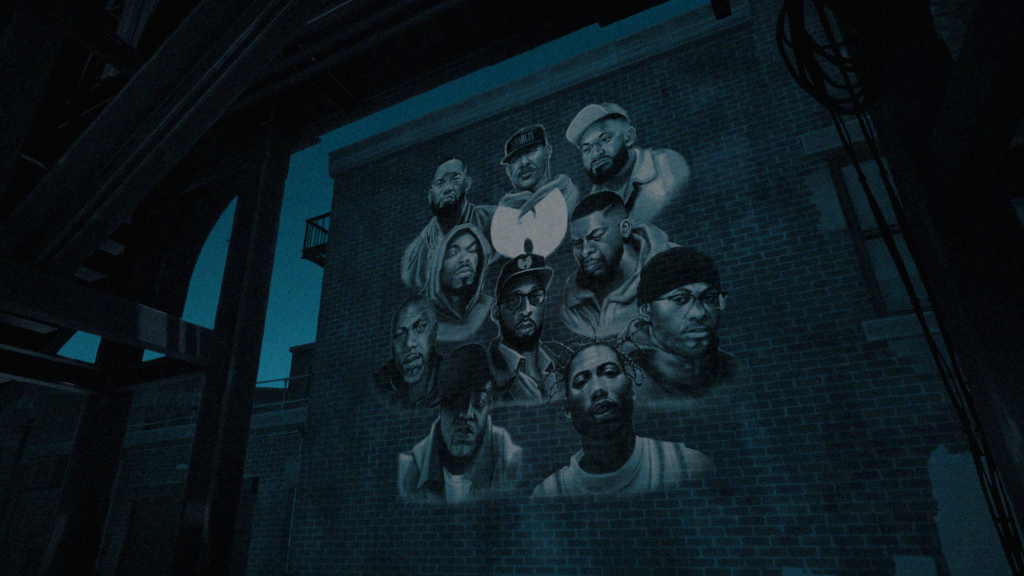
After 26 years away from video games, hip-hop’s most notorious and influential supergroup Wu-Tang Clan returns with “Wu-Tang: Rise of the Deceiver,” developed in close consultation with the group.
It’s also the debut game from Brass Lion Entertainment, Founded by veterans of big-budget studios in 2019 as a home for developers of diverse backgrounds, the studio’s motto is “All culture, no vulture.” “Rise of the Deceiver” is an action-adventure game where up to three players can customize their fighting styles and fashion, and features a dynamic soundtrack that reacts to on-screen action, with music produced by legendary producer Just Blaze.
The company began working on a now-canceled project before Wu-Tang members brought a script treatment to Creative Artists Agency in search of a games studio which could make a game based on Ghostface Killah and RZA’s upcoming film, “Angel of Dust.” The group was intrigued when they learned Just Blaze is Brass Lion’s director of music and culture.
Obviously they know him well, so that immediately created a bit of a bond and a lot of trust,” said Bryna Dabby Smith, CEO and co-founder of Brass Lion, who has worked on games like “Def Jam Vendetta” (2003) and “Sleeping Dogs” (2012). “We presented back to them some concepts for what the game could be and they loved it. The script is in the horror genre, but it really worked from an interactive perspective… so it works as a companion piece to Ghostface’s project.
The Ironman told The Washington Post that the studio has his full support. A trailer for the game debuted at the Summer Game Fest event and will be playing at every stop of the group’s “The Final Chamber” tour, which begins Friday in Baltimore.
This game right here, it’s the next chapter of the Wu-Tang saga, built on the Angel of Dust IP,” Ghostface said. “Brass Lion Entertainment, they know how to honor our legacy, but also push it to new heights, reaching out to new fans.
The game doesn’t have a release date yet, and the trailer is more of a teaser that showcases its action and aesthetic, a mix of Afro-surrealism with anime and the classic Shaw Brothers martial arts films that Wu-Tang evokes. It’s not yet known whether Wu members will be playable (“Stay tuned,” Smith tells me), but Brass Lion chief creative officer and co-founder Rashad Redic says players will “embody” the members with powers and special moves.
What would happen to humanity if we lost our ability to create and innovate, to no longer connect through collaboration and shared dreams?” Redic said, describing the story’s themes. “In the game you understand the feeling of lost inspiration and [being] discouraged to dream. This game takes that struggle and turns it into a big epic journey with the Wu-Tang.
The game will allow players to create their own character. That was an early and deliberate choice for the team of more than 50 developers, a relatively small team for games these days. Redic said the clothing will mix hip-hop and anime styles.
One of the things core to hip-hop is self-expression, and it’s really hard to do that if you’re playing another character,” Redic said. “The first way to open it up to how to identify with themselves and their art form is to allow people to create an avatar that serves as the fashion vehicle for looking good and slaying well.
“If you look at the way hip-hop impacts fashion sensibilities globally for 50-odd years, we’re trying to pay homage to that,” adds Evan Narcisse, who is writing the game. Narcisse was formerly a prolific journalist and critic who has since written for the Black Panther comics and consulted on games including Insomniac Games’ blockbuster Spider-Man series. For him, “Rise of the Deceiver” fills a void in the video game medium’s grasp of hip-hop culture.
Part of what we want to do with this game is honor … the places where hip-hop came from, which is still underrepresented in this medium, as well as the circumstances of the people who created this culture,” Narcisse said. “You don’t even have to be a superstar DJ or rapper to be involved in hip-hop.
Narcisse links the game’s apocalypse of human creativity to real-world cuts to arts and music education programs, coupled with people being priced out of access to expensive instruments.
Part of the reason it exists as a cultural form is because of deprivation,” Narcisse said. “People still wanted to express themselves and [find] lo-fi approachable ways to do that. That’s where hip-hop comes from. Here we are, 50 years on, and the very idea of that really hasn’t made it into video games as a medium.
Of course, the music industry mutated hip-hop artists and the art form toward hyperconsumerism,” he said. “But most people who engage with hip-hop do it because it gives them a voice that they feel they would not otherwise have, and that could be about being all Gucci’ed out and dripping like a leaky faucet, or it could be about, ‘Yo, I wish these cops would stop hassling me’ or ‘Why is the world order this way that I have to constantly fight upstream to make something of my life?’
Those principles, conflicting and otherwise, are the core of many Wu-Tang songs that lament the circumstances and inequities of their lives.
These are all ideas embedded into hip-hop. They are also universal human ideas,” Narcisse said. “Where other forms of media have figured out to fold that stuff in, video games continue to lag behind. … We’re approaching them as fictional characters in the game with all of that stuff in mind.
Ghostface said he believes the game honors the group’s past while pointing toward its future. They embark on what may be their final tour. while creating other forms of media.
“I’m hyped for the fans to step into this world with us,” he said. “It’s more than a game, it’s a movement, a piece of our history and the future all in one.”