
NEW YORK – Considering how much Boy George When he talked about enjoying the attention that came with fronting one of the most tenured bands of the New Wave movement, it was a bit surprising that he wasn’t in the room during the world premiere of “Boy George & Culture Club.”
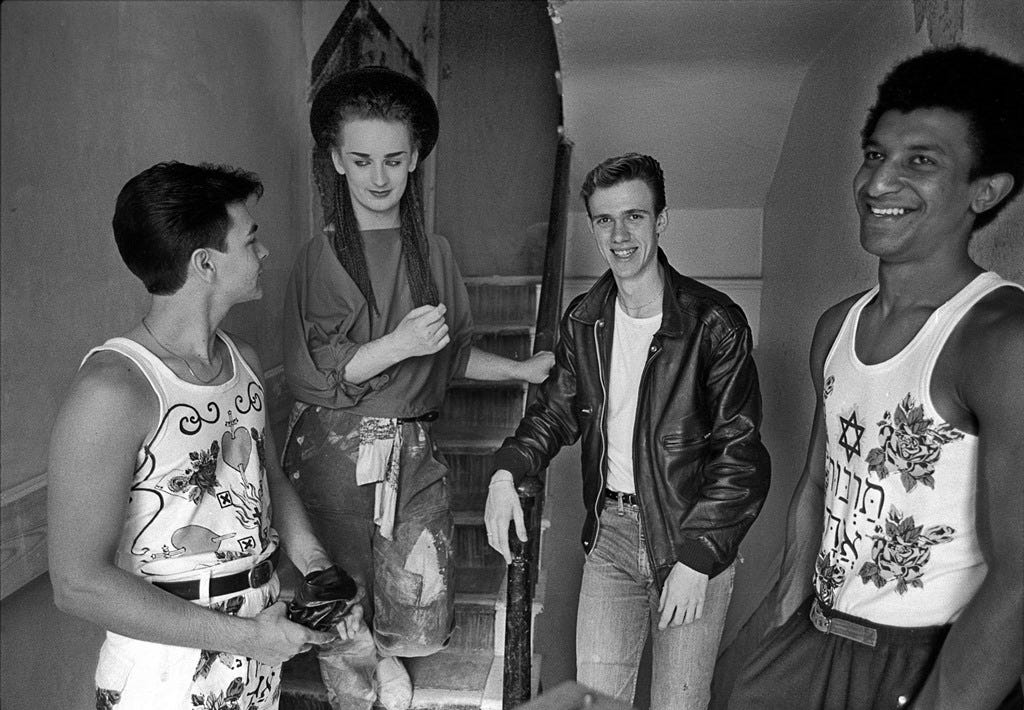
The new documentary from Alison Ellwood, noted for her recent deep dives into Laurel Canyon scene and the careers of Cyndi Lauper and The Go-Go’s, spotlights the British quartet as they catapulted to stratospheric success in the early-’80s with a distinctive combination of pop, reggae and blue-eyed soul hits.
Guitarist Roy Hay and Mikey Craig attended the screening held at BMCC Tribeca Performing Arts Center on June 5. After the Tribeca Film Festival Premiere: Hay was particularly emotional about the 96-minute film that traverses the band’s two years of indisputable world domination with smashes “Do You Really Want to Hurt Me” and “Karma Chameleon,” their steep fall from grace, Boy George and drummer Jon Moss’ tempestuous romantic relationship, and George’s heroin addiction.
“It was quite a journey,” Hay said from the venue’s stage, his voice catching at times. “I wasn’t prepared for (the film) to hit me so powerfully. Like Mikey, I have scar tissue from this band … it is a soap opera, but it was such a special thing and these guys are like brothers to me.”
Hay also expressed sadness that Moss, who won $2.3 million in a 2023 lawsuit against the band after alleging he was expelled from the group before a 2018 tour, wasn’t present to watch the film with his old group mates.
But even though the film candidly acknowledges the bitterness the Culture Club members
Not named Boy George, feeling the singular attention he commanded, as the vibrant and cheeky lead singer, Hay, at least, is ready to bury the thorny parts of the relationship.
“George is one of the most talented artists I have worked with,” Hay said. “He is the most naturally talented man I ever met.”
Culture Club always cultivated humor and drama
Ellwood excels Her true talent lies in portraying people, irrespective of their level of fame, in an unfiltered manner. But her real gift is in allowing the natural humor of her subjects to flourish.
As Moss recalls meeting George for the first time, the camera cuts to the man himself today, preening into his smartphone camera and fluttering his indigo-shaded eyes.
George reflects on how the foursome became Culture Club – named for their varied musical tastes and backgrounds – and downplays his entry into the group.
“I stumbled into it because I fancied the drummer,” he cackles from under one of his now-trademark rounded top hats.
That love affair with Moss was the foundation and the bulldozer of Culture Club, at times keeping George grounded and at others sparking the singer’s legendary petulance.
“I showed my mom a picture of George and she said, ‘He’s beautiful … don’t tell your father,'” Moss says with a smile.
Audio of a screaming match in the studio during the recording of the band’s landmark 1983 album “Colour By Numbers” illuminates the frustration among the members. But even though no one in the band aside from George wanted “Karma Chameleon” on the album (Moss jokes about the song’s perplexing lyrics), and the video shoot On a Mississippi riverboat, another round of agita was sparked (“Oh dear,” Moss remembers thinking of his ruffled shirt at the time), but none of the band members regrets the outcome. I think we lost a lot of credibility with ‘Karma Chameleon,’ ” Hay says. “But it’s what we’re remembered for.
Boy George endured intense homophobia in the ’80s
Ellwood also doesn’t circumvent the reality of the era for a band with a frontman who wore more makeup than the cast of “Dallas” and was, to many people in the ’80s, a freak not worth hearing, no matter his stunning voice.
Vintage concert video shows George, clad in the multicolored frock and wide-brimmed hat he turned into a much-emulated fashion statement during Culture Club’s U.S. conquest, sashaying around a stage crooning. “Church of the Poison Mind” at an obviously full and large venue befitting the band’s status in 1983.
But Ellwood also unearthed video of a young George looking down and away on stage as Culture Club performs an early club show and homophobic slurs are flung at him from the crowd. He navigates the situation gracefully, but with obvious hurt.
Interview clips from visits to David Letterman and Johnny Carson’s late-night shows are also cringe-inducing as the men force George to defend his flamboyant exterior, which he does with confidence and self-deprecation. He finally reminds Carson of Liberace and quips, “I’m hardly revolutionary.”
Culture Club members lament missing Band Aid, Live Aid
But like any breakup, the slide from mega-stardom to ego-driven demise is a painful one.
Craig still laments – both on film and on the Tribeca stage- that he and Hay were not invited to participate in Band Aid, the charity event spearheaded by Bob Geldof that brought together nearly every major British superstar of the time to sing “Do They Know It’s Christmas?”
The explanation at the time was that Craig and Hay were partying in New York and couldn’t get back to London. Craig’s facial expression during the retelling indicates that was not quite true.
Craig harbors even more regret that Culture Club did not participate in Live Aid, the massive two-continent concert staged by Geldof that included megastars David Bowie, Elton John, Led Zeppelin, and Mick Jagger.
George wouldn’t commit to the performance, which the band later learned was because he was on a drug binge with fellow androgynous ’80s singer Marilyn.
A serious substance abuse problem, an arrest for heroin possession and upcoming rehabilitation for George spurred a quiet disappearing act for Culture Club.
But the band, which continues to tour Without Moss, they have made amends with their past and maintain their affection for each other.
“It’s been an amazing journey,” Moss says in the film. “And George is an amazing person.”
The article originally appeared on USA TODAY:
Culture Club film delves into history filled with drama, Boy George, love and drugs