
The scene is straight out of a picture book that we pored over as a child,
Linnea in Monet’s Garden : A small green bridge, with paint peeling in parts, spans over a pond of water lilies. The story of the young girl, visiting Claude Monet’s enchanting garden in Giverny captivated me more than any other book in my bedroom growing up on Sydney’s northern beaches.
The bridge in front of me is clearly inspired by Giverny, but there’s no doubt as I look around what Latour-Marliac gave to Giverny. Water lilies, in a cascade of shades from light yellow to fuchsia. Monet ordered them from here by the dozens, if the hand-scrawled invoice dated May 15, 1894, hanging inside the small museum tucked at the back of the garden is anything to go by.
It was a subject the artist would paint nearly 300 times over three decades, including the monumental set of eight panels on display at the Musée de l’Orangerie in Paris and among his works traveling to Melbourne from the Museum of Fine Arts in Boston for the French Impressionism exhibition opening at the NGV International on June 6.
Every one of them was pulled out of curved basins that, on this warm Spring afternoon, are packed with water lilies in bloom and are framed by large terracotta pots typically used to cook the classic southwestern French sausage and bean stew, cassoulet. The nursery continues to supply Giverny, as well as other clients such as Dior, who order a steady source of flowers for a line of water-lily-based cosmetics.
Latour-Marliac had been open for nearly two decades by the time Monet placed that first order. The first water lily nursery in the world, it was named after its founder, Joseph Bory Latour-Marliac, who had found a way to crossbreed the plant and, in doing so, create the first flowers in colors other than white. In 1889, Latour-Marliac took his collection to the Exposition Universelle in Paris. This gardener from the deep provinces caused a sensation – and attracted the notice of Monet. “If this garden had never existed, the world would never have had Monet’s water lilies,” says one of the staff as I pay the €9 ($16) entrance fee.
The site has expanded in the century since Latour-Marliac died in 1911, and is now owned by a French-American businessman and university professor, Robert Sheldon. Rows of rectangular basins dug into the earth, home to a total of 250 varieties of water lilies, fill out land that during Latour-Marliac’s time were fields.
The ponds are also home to eight species of frogs, and it’s their song that provides the soundtrack – and their movements much entertainment – as I walk around the garden after a light lunch of pâté and salad under the shade of vine leaves in the on-site restaurant. Beyond the colorful ponds, a path threads through a shaded forest of bamboo, Latour-Marliac’s first horticultural passion.
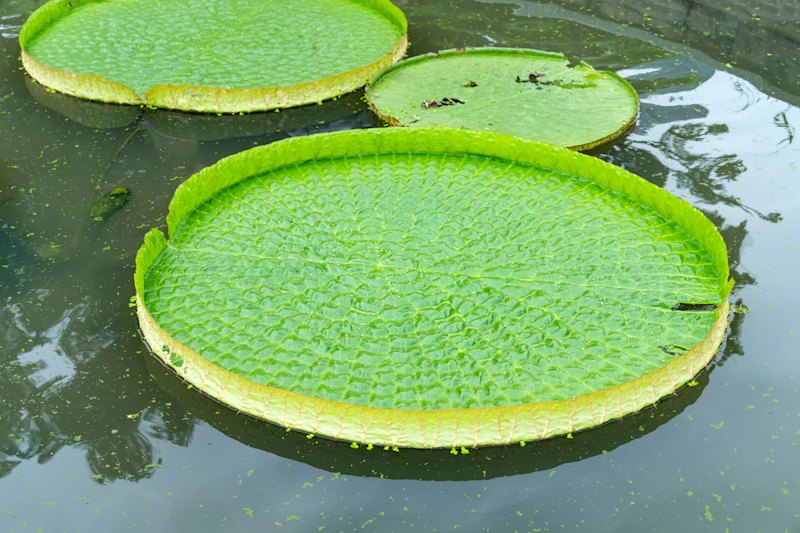
The nursery opens to visitors at the beginning of May, when the first water lilies burst into bloom, but it’s at its most dazzling between June and September when the tropical water lily ponds, lotus and the Victoria Amazonica, the species with such wide and perfectly formed round leaves they look like floating tart dishes, flower in a hot and humid greenhouse. It closes again to the public at the end of September.
Latour-Marliac’s family residence from the Napoleonic era, located just a five-minute walk away, remains a more enduring attraction in the village. After closing like a time capsule not long after he passed away, the house opened to the public for the first time last summer as the Maison-Musée Latour-Marliac, and it still retains much of its early twentieth-century ambiance.
The new owner, landscape architect Thierry Huau, whose workshop is on rue Claude Monet in Giverny, has styled each room like a whimsical cabinet of curiosities to trace how plants have influenced art, using cutting-edge visual technologies to make the narrative pop.
With these two attractions, the unlikely village of Le Temple-sur-Lot has woven itself into the Monet story – and what a delightful chapter it is.